 f67c544e16
## Summary

Resolves #562

Implements regex change to support valid characters discussed by
@daveallie in issue
[here](https://github.com/crosspoint-reader/crosspoint-reader/issues/562#issuecomment-3830809156).

Also rejects `.` and `..` as folder names which are invalid in FAT32 and
exFAT filesystems

## Additional Context
- Unsure on the wording for the alert, it feels overly explicit, but
that might be a good thing. Happy to change.

---

### AI Usage

While CrossPoint doesn't have restrictions on AI tools in contributing,
please be transparent about their usage as it
helps set the right context for reviewers.

Did you use AI tools to help write this code? _**< PARTIALLY >**_
7.1 KiB
Web Server Guide
This guide explains how to connect your CrossPoint Reader to WiFi and use the built-in web server to upload EPUB files from your computer or phone.
Overview
CrossPoint Reader includes a built-in web server that allows you to:
- Upload EPUB files wirelessly from any device on the same WiFi network
- Browse and manage files on your device's SD card
- Create folders to organize your ebooks
- Delete files and folders
Prerequisites
- Your CrossPoint Reader device
- A WiFi network
- A computer, phone, or tablet connected to the same WiFi network
Step 1: Accessing the WiFi Screen
- From the main menu or file browser, navigate to the Settings screen
- Select the WiFi option
- The device will automatically start scanning for available networks
Step 2: Connecting to WiFi
Viewing Available Networks
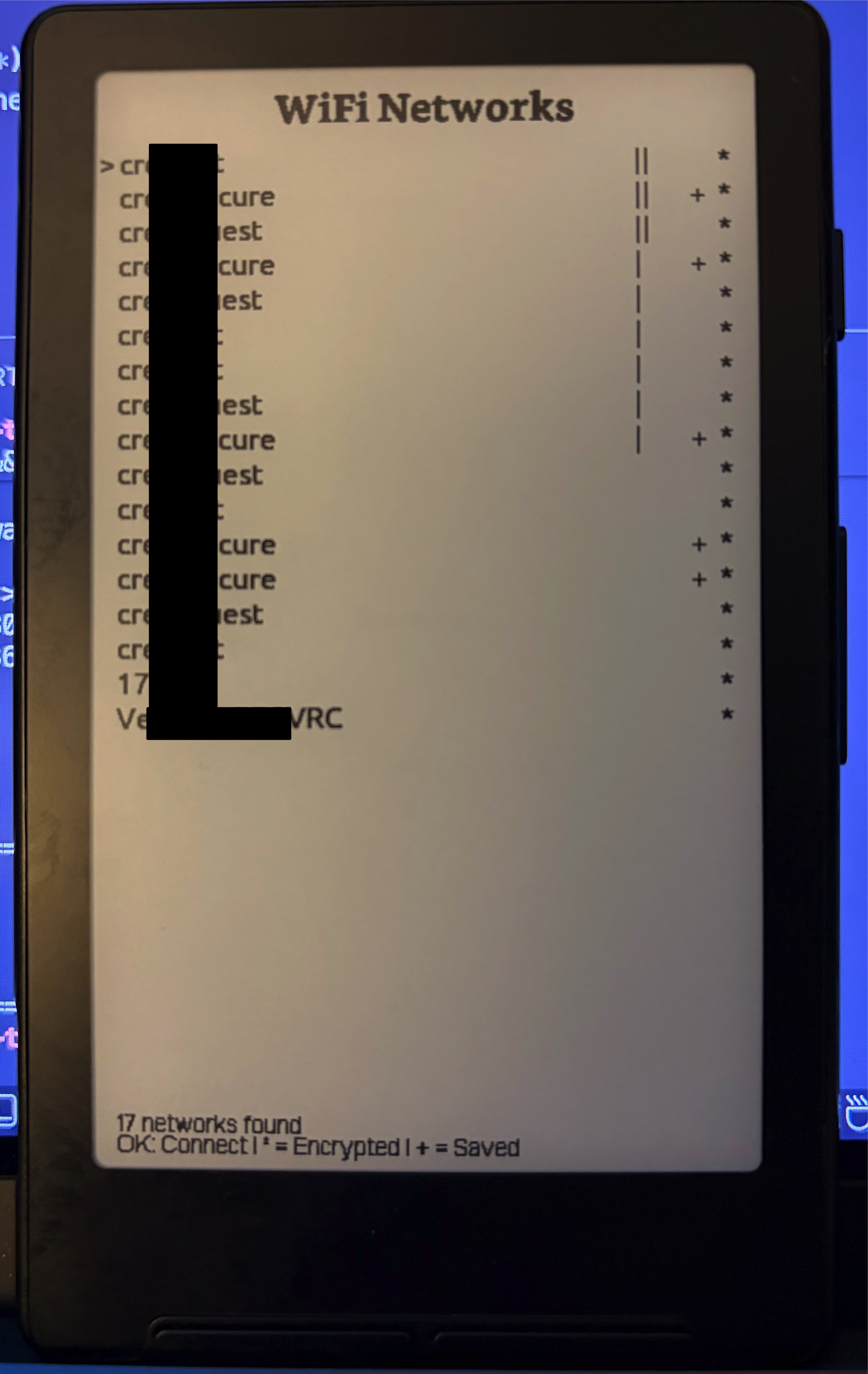
Once the scan completes, you'll see a list of available WiFi networks with the following indicators:
- Signal strength bars (
||||,|||,||,|) - Shows connection quality *symbol - Indicates the network is password-protected (encrypted)+symbol - Indicates you have previously saved credentials for this network
Selecting a Network
- Use the Left/Right (or Volume Up/Down) buttons to navigate through the network list
- Press Confirm to select the highlighted network
Entering Password (for encrypted networks)
If the network requires a password:
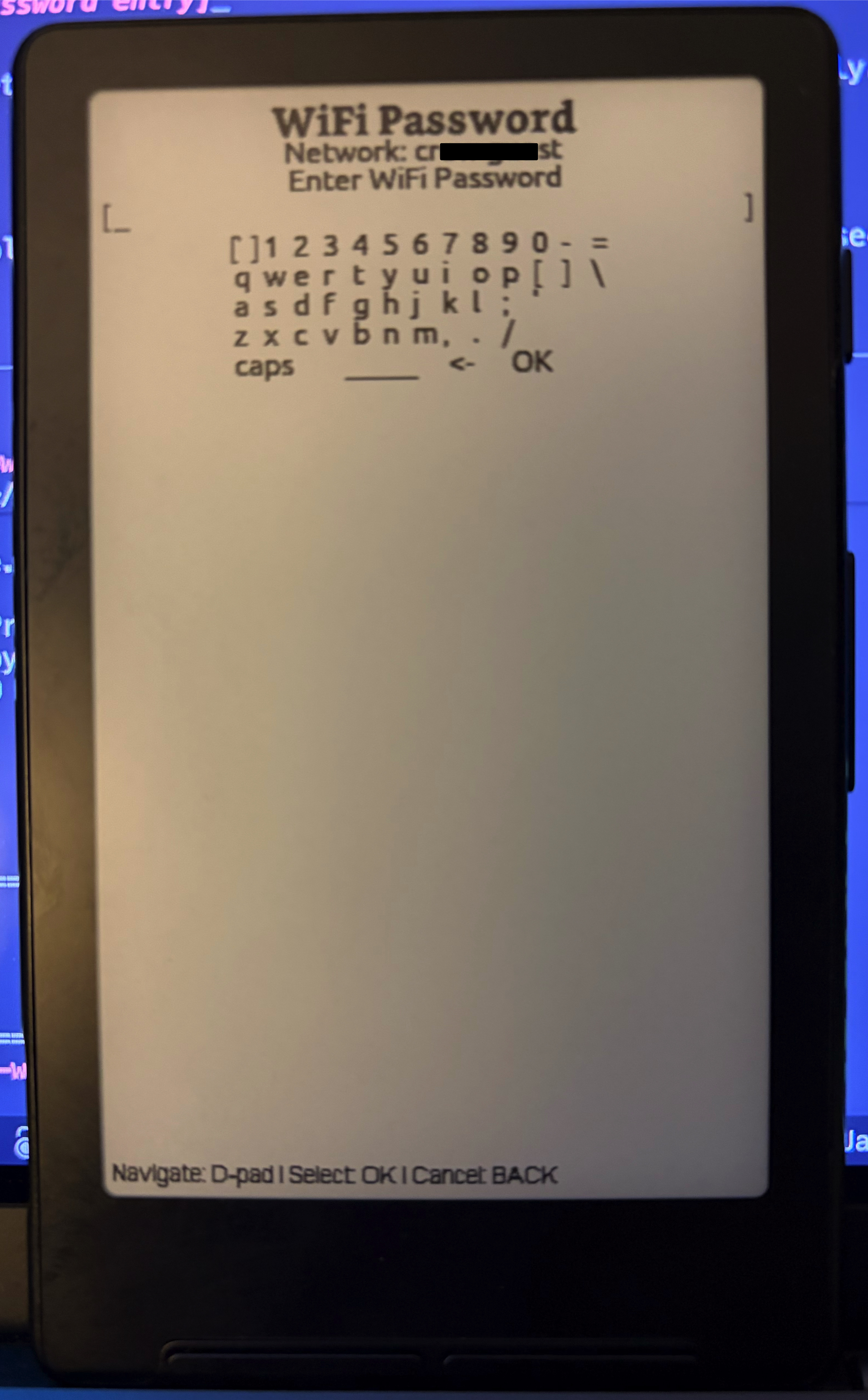
- An on-screen keyboard will appear
- Use the navigation buttons to select characters
- Press Confirm to enter each character
- When complete, select the Done option on the keyboard
Note: If you've previously connected to this network, the saved password will be used automatically.
Connection Process
The device will display "Connecting..." while establishing the connection. This typically takes 5-10 seconds.
Saving Credentials
If this is a new network, you'll be prompted to save the password:
- Select Yes to save credentials for automatic connection next time (NOTE: These are stored in plaintext on the device's SD card. Do not use this for sensitive networks.)
- Select No to connect without saving
Step 3: Connection Success
Once connected, the screen will display:
- Network name (SSID)
- IP Address (e.g.,
192.168.1.102) - Web server URL (e.g.,
http://192.168.1.102/)

Important: Make note of the IP address - you'll need this to access the web interface from your computer or phone.
Step 4: Accessing the Web Interface
From a Computer
- Ensure your computer is connected to the same WiFi network as your CrossPoint Reader
- Open any web browser (Chrome is recommended)
- Type the IP address shown on your device into the browser's address bar
- Example:
http://192.168.1.102/
- Example:
- Press Enter
From a Phone or Tablet
- Ensure your phone/tablet is connected to the same WiFi network as your CrossPoint Reader
- Open your mobile browser (Safari, Chrome, etc.)
- Type the IP address into the address bar
- Example:
http://192.168.1.102/
- Example:
- Tap Go
Step 5: Using the Web Interface
Home Page
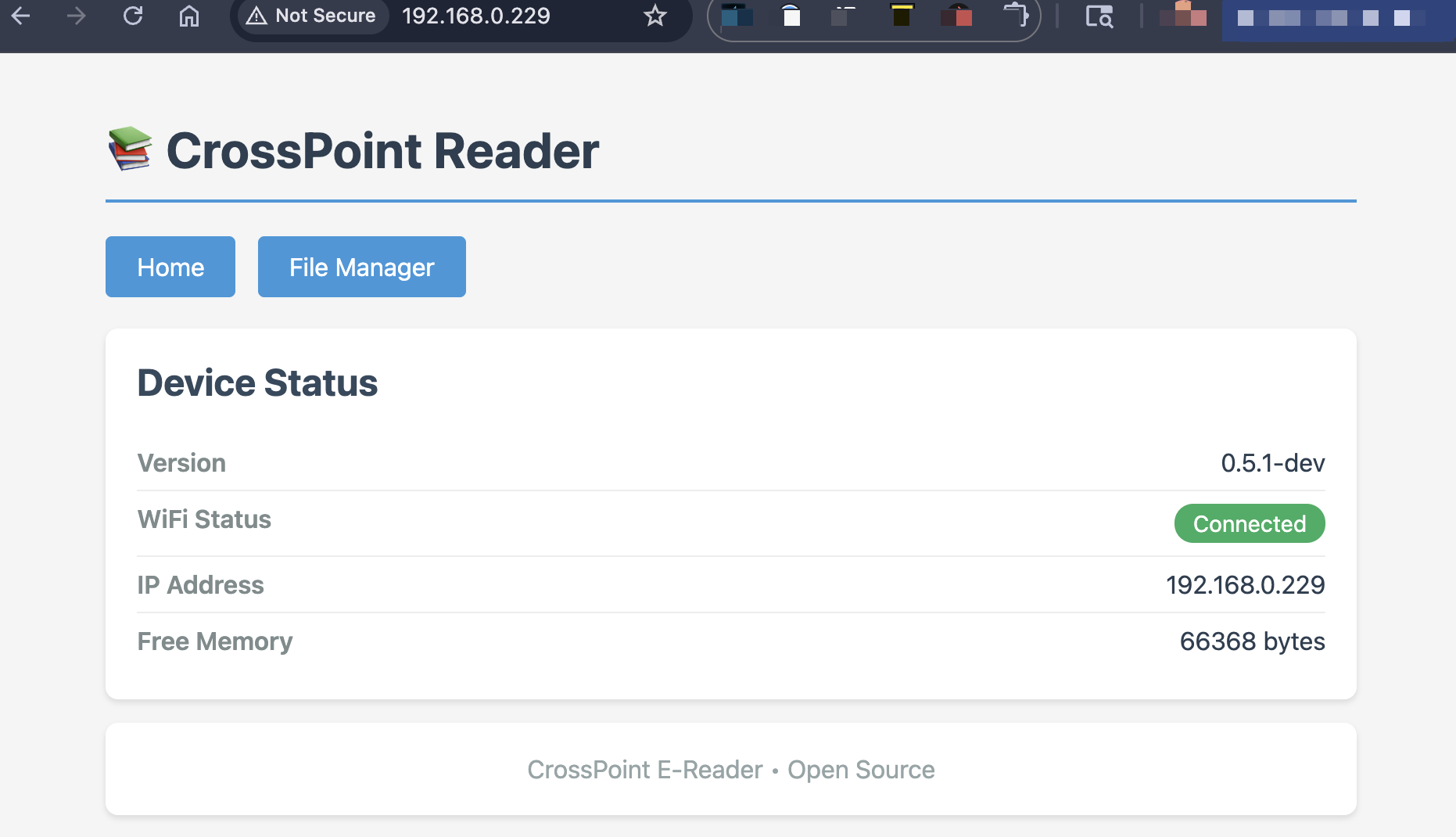
The home page displays:
- Device status and version information
- WiFi connection status
- Current IP address
- Available memory
Navigation links:
- Home - Returns to the status page
- File Manager - Access file management features
File Manager
Click File Manager to access file management features.
Browsing Files
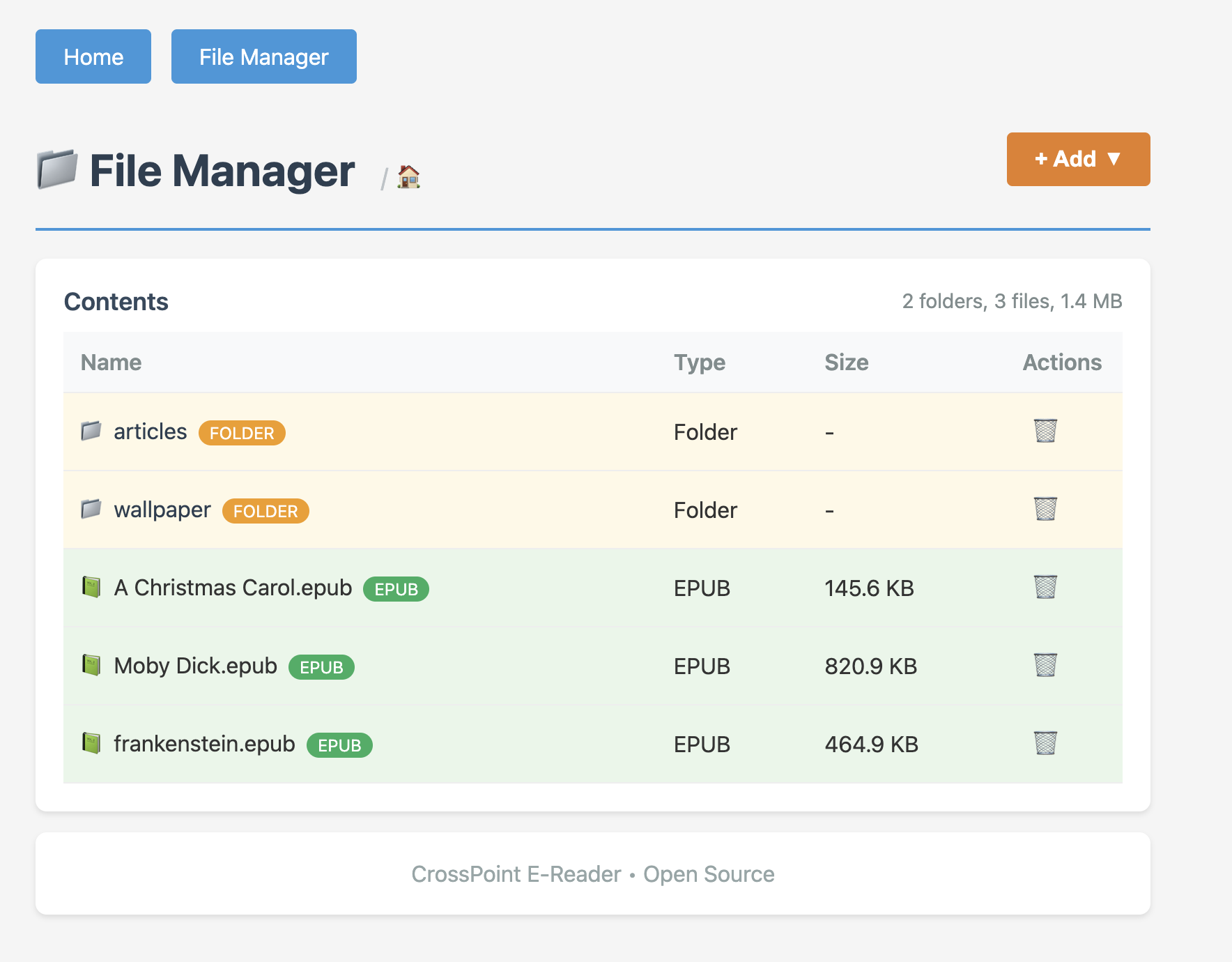
- The file manager displays all files and folders on your SD card
- Folders are highlighted in yellow with a 📁 icon
- EPUB files are highlighted in green with a 📗 icon
- Click on a folder name to navigate into it
- Use the breadcrumb navigation at the top to go back to parent folders
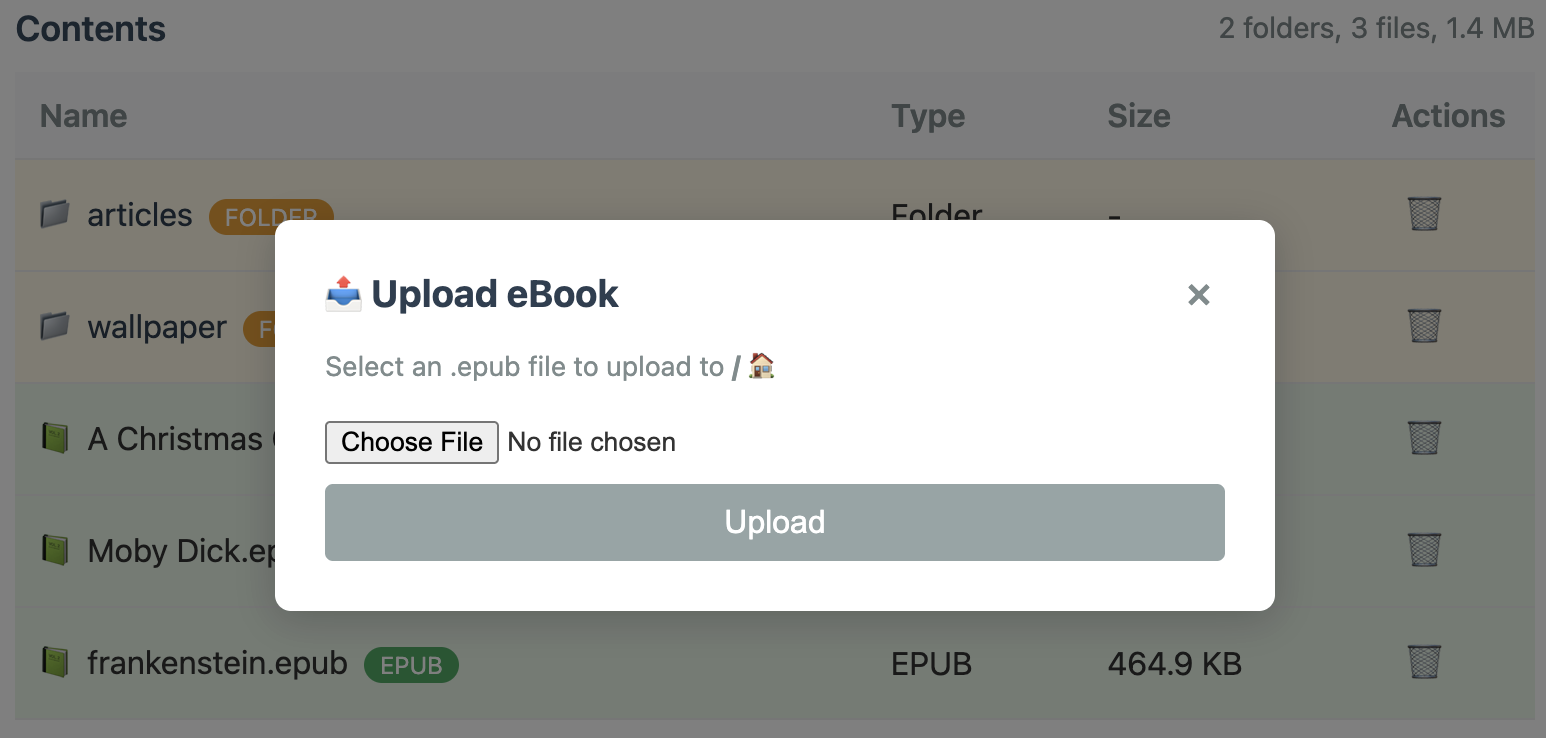
Uploading EPUB Files
- Click the + Add button in the top-right corner
- Select Upload eBook from the dropdown menu
- Click Choose File and select an
.epubfile from your device - Click Upload
- A progress bar will show the upload status
- The page will automatically refresh when the upload is complete
Note: Only .epub files are accepted. Other file types will be rejected.
Creating Folders
- Click the + Add button in the top-right corner
- Select New Folder from the dropdown menu
- Enter a folder name (must not contain characters " * : < > ? / \ | and must not be . or ..)
- Click Create Folder
This is useful for organizing your ebooks by genre, author, or series.
Deleting Files and Folders
- Click the 🗑️ (trash) icon next to any file or folder
- Confirm the deletion in the popup dialog
- Click Delete to permanently remove the item
Warning: Deletion is permanent and cannot be undone!
Note: Folders must be empty before they can be deleted.
Command Line File Management
For power users, you can manage files directly from your terminal using curl while the device is in File Upload mode a detailed documentation can be found here.
Security Notes
- The web server runs on port 80 (standard HTTP)
- No authentication is required - anyone on the same network can access the interface
- The web server is only accessible while the WiFi screen shows "Connected"
- The web server automatically stops when you exit the WiFi screen
- For security, only use on trusted private networks
Technical Details
- Supported WiFi: 2.4GHz networks (802.11 b/g/n)
- Web Server Port: 80 (HTTP)
- Maximum Upload Size: Limited by available SD card space
- Supported File Format:
.epubonly - Browser Compatibility: All modern browsers (Chrome, Firefox, Safari, Edge)
Tips and Best Practices
- Organize with folders - Create folders before uploading to keep your library organized
- Check signal strength - Stronger signals (
|||or||||) provide faster, more reliable uploads - Upload multiple files - You can upload files one at a time; the page refreshes after each upload
- Use descriptive names - Name your folders clearly (e.g., "SciFi", "Mystery", "Non-Fiction")
- Keep credentials saved - Save your WiFi password for quick reconnection in the future
- Exit when done - Press Back to exit the WiFi screen and save battery
Exiting WiFi Mode
When you're finished uploading files:
- Press the Back button on your CrossPoint Reader
- The web server will automatically stop
- WiFi will disconnect to conserve battery
- You'll return to the previous screen
Your uploaded files will be immediately available in the file browser!
Related Documentation
- User Guide - General device operation
- Troubleshooting - Troubleshooting
- README - Project overview and features